Quick Answer: What Is a Great American Cookie Cake?
A Great American Cookie Cake is an oversized, pan-baked chocolate chip cookie decorated with rich fudge or vanilla buttercream frosting. Introduced by the bakery chain Great American Cookies in 1977, it serves as a chewy, shareable alternative to traditional sponge birthday cakes.
Standard sizes range from a 12-inch round (8 to 10 servings) to a 16-inch round (12 to 16 servings), extending to sheet-pan configurations for larger crowds. The cookie is famous for its dense, buttery interior, crisp scalloped outer rim, and piped borders customized for holidays, birthdays, and milestones.
- Core Base: High-ratio brown sugar chocolate chip cookie dough.
- Signature Frosting: Stiff, crusting vanilla buttercream and rich chocolate fudge icing.
- Standard Dimensions: 12-inch round, 16-inch round, heart-shaped, and quarter-sheet rectangles.
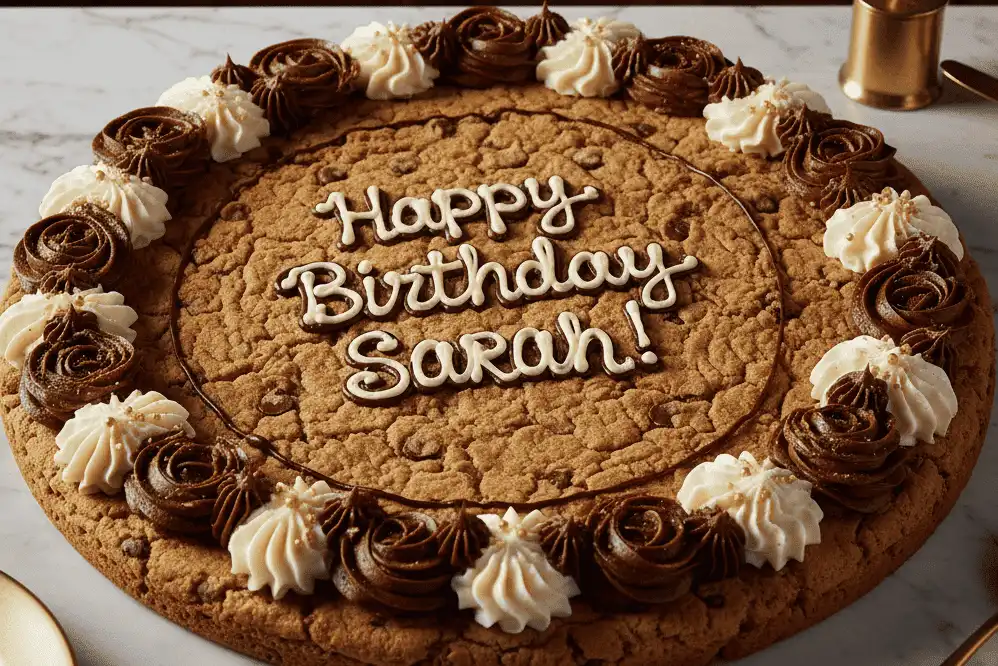
Celebration desserts often struggle to balance nostalgic appeal with crowd-pleasing taste. Traditional sponge cakes frequently end up half-eaten on party plates due to dry crumb or overly sugary fondant.
The Great American Cookie Cake solves this problem by turning a classic, chew-centered chocolate chip cookie into a celebratory centerpiece. Whether you want to order a custom cake from a local bakery kiosk or bake an exact copycat from scratch in your home kitchen, this guide covers every detail.
You will discover exact sizing charts, custom design limits, step-by-step baking ratios, and foolproof storage methods to keep your dessert fresh.
The Anatomy and Science of the Signature Texture
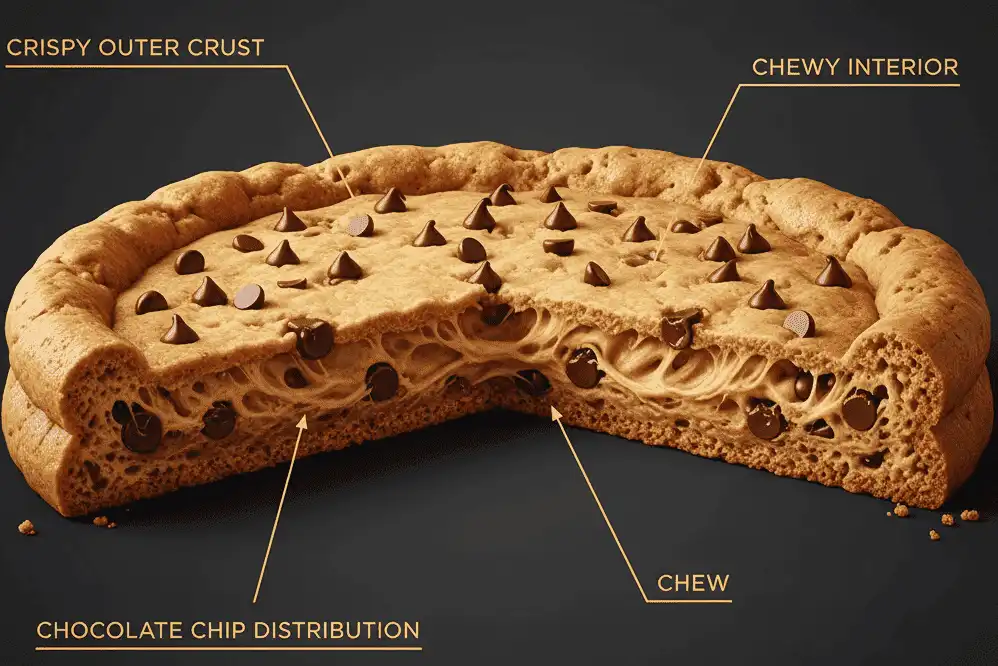
The magic of a commercial cookie cake lies in its distinct textural gradient. Unlike standard drop cookies that spread thin on a flat baking sheet, a cookie cake is confined within a solid metal rim.
This confinement alters heat transfer during baking. The dough against the outer metal pan edge caramelizes quickly via direct conduction, producing a firm, buttery perimeter capable of supporting heavy piped borders.
The center cooks primarily through ambient convection. Because the thermal mass of the thick dough absorbs heat slowly, the center remains dense, moist, and slightly under-baked.
The Dough Formulation
Commercial cookie cake dough relies on a higher proportion of dark brown sugar compared to white granulated sugar. The natural molasses content in brown sugar provides acidity, which reacts with baking soda to create tenderization without excessive rising.
Melted fat is blended into the flour rather than aggressively creamed. Skipping the aeration step keeps the dough dense, preventing the cake from puffing up like a sponge cake and later collapsing into a crater.
The Frosting Chemistry
The decorative border requires a specific icing structure that holds intricate shell borders without sagging at room temperature. Great American Cookies uses a crusting buttercream formulation made with a balanced ratio of confectioners’ sugar, fat, and cocoa solids.
This icing forms a delicate outer shell within thirty minutes of exposure to air. The crust seals the moisture inside the frosting, allowing the cake to sit on display tables for hours without the lettering blurring or the borders melting.
Size, Shape, and Serving Guide
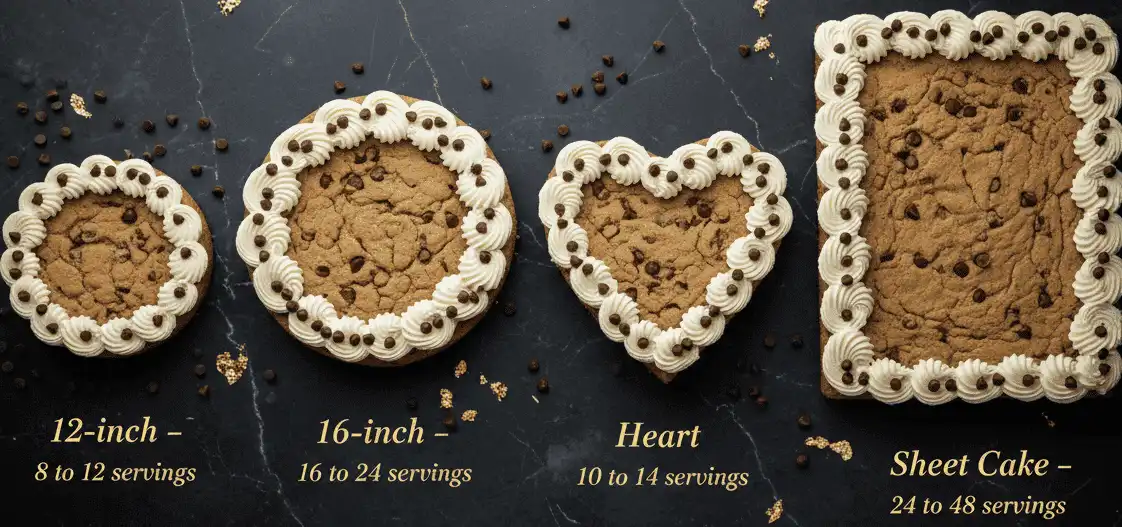
Selecting the correct size prevents two common party disasters: running out of dessert or throwing away expensive leftovers. Cookie cakes are far denser than flour-based sponge cakes, meaning smaller physical slices satisfy guests easily.
12-Inch Round Cookie Cake
The 12-inch round cake is the standard choice for casual family gatherings, office departures, and small children’s parties. It yields between 8 and 10 traditional wedge-style slices.
Because the surface area measures approximately 113 square inches, decorative lettering should remain brief. Names, simple slogans like “Happy Birthday,” or small centered icons work best on this canvas.
16-Inch Round Cookie Cake
The 16-inch round cake is the brand’s flagship product and the most popular option for birthday parties. Providing roughly 201 square inches of surface area, it yields 12 to 16 large slices, or up to 20 slender party slices.
This size easily accommodates complex piped designs, corporate logos, full character drawings, and longer personalized messages surrounded by two-tone shell borders.
Specialty Shapes: Hearts, Stars, and Rectangles
Heart-shaped cakes are standard seasonal staples for Valentine’s Day, Mother’s Day, and anniversaries. They measure roughly the same dough weight as a 12-inch round but offer a unique silhouette for gifting.
Quarter-sheet and half-sheet rectangular cookie cakes cater to school graduations and corporate events. Slicing these into a checkerboard grid allows event planners to serve 24 to 40 individuals with precise portion control.
Crust Flavors, Batters, and Icing Varieties
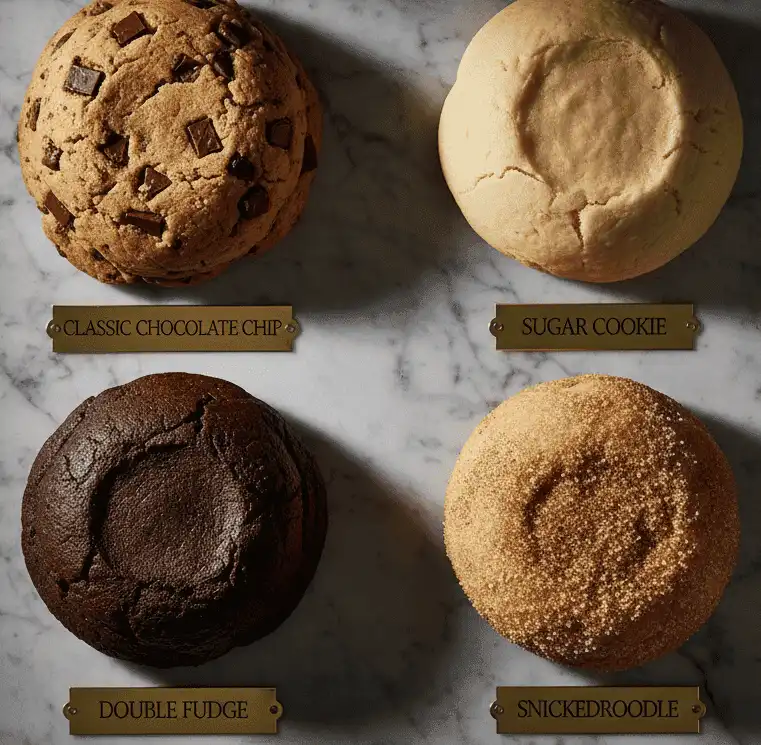
While the original chocolate chip dough remains the undisputed bestseller, several alternative bases and icing options exist to match different taste preferences.
Base Batter Varieties
Original Chocolate Chip: Golden-brown buttery dough loaded with semi-sweet chocolate morsels. This base delivers the traditional balance of salt, vanilla, and caramel notes.
Double Fudge / Chocolate: Rich cocoa-infused dough mixed with white or semi-sweet chocolate chips. It has a flavor profile similar to a dense, chewy fudge brownie.
Sugar Cookie Base: A pale, sweet, vanilla-forward dough without chocolate chips. This provides a clean, neutral canvas for colorful sprinkles, fruit-themed decorations, and brightly colored icings.
M&M Chocolate Chip: The classic dough base topped and filled with candy-coated milk chocolate pieces. The candy shells add a distinct, crunchy contrast to the soft center.
Snickerdoodle: A cinnamon-sugar infused dough base that creates an aromatic spiced profile, popular during autumn and winter holiday gatherings.
Frosting Profiles
Fudge Buttercream: A dark, glossy, chocolate-rich icing piped along borders and used for bold lettering. It provides a sharp, decadent counterpoint to the buttery cookie crust.
Classic Vanilla Buttercream: Smooth, sweet, and highly versatile. This frosting is easily tinted into vibrant neon, pastel, or primary colors for character art and floral accents.
Cream Cheese Icing: Occasionally offered for specialty seasonal rollouts, providing a tangy finish that cuts through the rich sugar content of the base.
Custom Designs, Lettering, and Themed Borders
Customization transforms a commercial dessert into a memorable centerpiece. Understanding the technical boundaries of icing application ensures your design turns out clean and legible.
Character Limits and Typography
Piping gel and buttercream tips require physical space to form distinct letter shapes. Attempting to fit more than four or five words on a 12-inch cake causes the decorator to use thinner piping tips, which can make text look crowded.
For best visual balance, limit your message to three lines: the occasion (e.g., “Happy 10th Birthday”), the recipient’s name (e.g., “Alexander”), and an optional small icon (e.g., stars or balloons).
Border Styles
Classic Shell Border: Created with an open star piping tip, producing overlapping crests around the perimeter. It acts as a physical dam to catch crumbs when slicing.
Braided Two-Tone Border: Uses a split piping bag filled with two contrasting frosting colors (such as royal blue and bright yellow), creating a continuous striped ribbon around the rim.
Rosette Perimeter: Tight spirals of vanilla frosting placed side by side, commonly used for elegant bridal showers or milestone anniversary cakes.
Edible Image Printing
Many bakery locations provide direct edible printing. High-resolution digital photos, corporate logos, or licensed cartoon graphics are printed with food-grade ink onto thin edible wafer sheets.
These sheets are applied directly to the center of the cookie cake. The moisture from the dough naturally softens the edible paper, blending it into the dessert surface so it slices cleanly.
How to Order: Online, In-Store, and Lead Times

A smooth ordering experience depends on choosing the right channel and giving the bakery adequate preparation time.
Ordering Channels
In-Store / Mall Kiosks: Ideal for rapid turnaround. Most brick-and-mortar locations keep pre-baked, blank 16-inch round cakes in temperature-controlled holding cases. Decorators can apply basic borders and custom names in fifteen to twenty minutes.
Official Online Website & Mobile App: Best for elaborate custom orders. The digital builder lets you select exact color hex codes, upload reference artwork, choose specific piping tips, and schedule a pick-up time.
Third-Party Delivery Apps: Convenient for emergency desserts, though customization options on apps like DoorDash or UberEats are strictly limited to simple pre-set text fields.
Lead Time Requirements
Standard plain cookie cakes with simple lettering require only 1 to 2 hours of advance notice at most retail bakeries. However, high-volume holidays demand greater lead times.
For events falling on Valentine’s Day, Mother’s Day, or peak graduation weekends in May, place your order at least 48 to 72 hours in advance to guarantee your preferred size and pickup slot.
The Ultimate Copycat Recipe and Baking Method
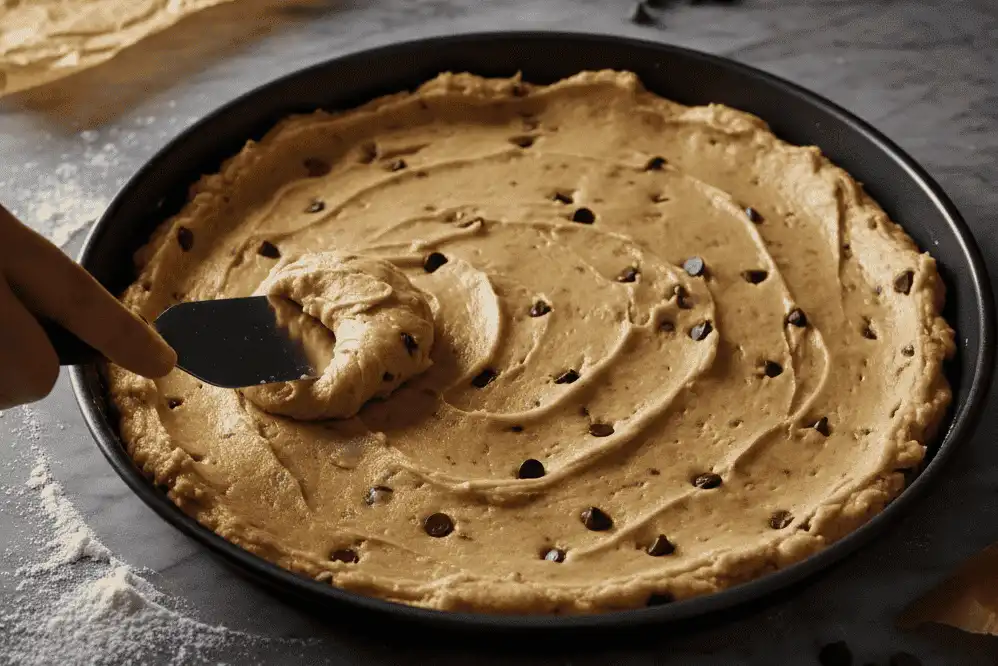
Making an authentic Great American Cookie Cake at home requires matching the specific moisture-to-fat ratios used by commercial bakeries. This tested recipe produces an authentic 12-inch cookie cake with a golden exterior and a rich, chewy center.
Equipment Required
- 12-inch round metal pizza pan or tart pan with a 1-inch rim
- Parchment paper cut to a 12-inch circle
- Electric hand mixer or stand mixer fitted with the paddle attachment
- Pastry piping bags fitted with Open Star Tip (Wilton 1M) and Round Tip #3
- Digital kitchen scale for precise ingredient weights
Ingredients
| Component | Ingredient | Quantity (Standard / Metric) |
|---|---|---|
| Cookie Dough | All-Purpose Flour (unbleached) | 2 cups (240g) |
| Cookie Dough | Cornstarch | 1 tablespoon (8g) |
| Cookie Dough | Baking Soda | 3/4 teaspoon (3.5g) |
| Cookie Dough | Fine Sea Salt | 1/2 teaspoon (3g) |
| Cookie Dough | Unsalted Butter (melted and cooled) | 3/4 cup / 1.5 sticks (170g) |
| Cookie Dough | Dark Brown Sugar (tightly packed) | 3/4 cup (150g) |
| Cookie Dough | Granulated White Sugar | 1/3 cup (65g) |
| Cookie Dough | Large Egg + 1 Large Egg Yolk | Room temperature (approx. 70g total) |
| Cookie Dough | Pure Vanilla Extract | 2 teaspoons (10ml) |
| Cookie Dough | Semi-Sweet Chocolate Chips | 1 1/4 cups (215g) |
| Fudge Buttercream | Unsalted Butter (softened) | 1/2 cup / 1 stick (113g) |
| Fudge Buttercream | Dutch-Process Cocoa Powder | 1/3 cup (35g) |
| Fudge Buttercream | Confectioners’ Sugar | 1 1/2 cups (180g) |
| Fudge Buttercream | Heavy Cream or Whole Milk | 2 to 3 tablespoons (30-45ml) |
Step-by-Step Instructions
Step 1: Oven and Pan Preparation
Preheat your oven to 350°F (175°C). Grease your 12-inch metal pizza pan with non-stick cooking spray and line the bottom with a 12-inch circle of parchment paper. Greasing under and over the parchment prevents the base from sticking during hot slice removal.
Step 2: Whisking Dry Ingredients
In a medium mixing bowl, whisk together the unbleached all-purpose flour, cornstarch, baking soda, and fine sea salt until uniform. The cornstarch softens the wheat protein, yielding the bakery’s signature chew.
Step 3: Combining Wet Ingredients
In a separate large bowl, combine the melted butter, dark brown sugar, and granulated sugar. Whisk vigorously by hand for 60 seconds until the sugars dissolve into the warm butter and the mixture appears glossy. Add the whole egg, extra egg yolk, and vanilla extract, whisking until thoroughly emulsified.
Step 4: Dough Assembly
Pour the dry flour mixture into the wet ingredients. Fold gently using a stiff silicone spatula just until no raw flour streaks remain. Gently fold in the semi-sweet chocolate chips, being careful not to overwork the gluten.
Step 5: Pan Pressing
Transfer the dough into the center of the prepared pan. Using clean hands or the flat bottom of a measuring cup coated with cooking spray, press the dough evenly outward until it reaches within 1/2 inch of the pan edge. Leave the perimeter slightly higher than the center to form a natural crust rim.
Step 6: The Bake
Bake on the center oven rack at 350°F (175°C) for 18 to 22 minutes. Remove the pan immediately when the edges turn a golden caramel brown while the center appears soft, pale, and slightly puffed.
Step 7: Cooling and Setting
Place the pan on a wire cooling rack and leave it undisturbed for at least 90 minutes. The residual pan heat finishes setting the center dough without drying it out. Do not attempt to pipe frosting onto a warm cookie.
Step 8: Frosting and Piping
Beat the softened butter, cocoa powder, confectioners’ sugar, and heavy cream on medium-high speed for 3 minutes until smooth and pipeable. Transfer to your piping bag fitted with the 1M star tip. Pipe continuous shell borders around the outer edge and switch to a small round tip to write your custom text across the center.
Cookie Cake Sizing and Party Comparison Chart
This comparison chart helps you match cake dimensions with guest counts, pan shapes, and expected slice portions.
| Pan Size & Shape | Surface Area | Standard Servings | Best Event Application | Text / Design Capacity |
|---|---|---|---|---|
| 12-Inch Round | ~113 sq. inches | 8 – 10 slices | Family dinners, small kids’ parties | Short text (1–3 words), simple border |
| 16-Inch Round | ~201 sq. inches | 14 – 18 slices | Standard birthday parties, sports teams | Full custom messages, central graphics |
| Heart-Shaped | ~110 sq. inches | 6 – 8 slices | Valentine’s, anniversaries, date nights | Names, romantic phrases, floral piping |
| Quarter Sheet (9×13″) | ~117 sq. inches | 12 – 16 square bars | Classroom parties, office potlucks | Grid layouts, clean rectangular slicing |
| Half Sheet (18×13″) | ~234 sq. inches | 25 – 35 square bars | School graduations, corporate galas | Corporate logos, complex multi-color art |
Storage, Freezing, and Reheating Instructions
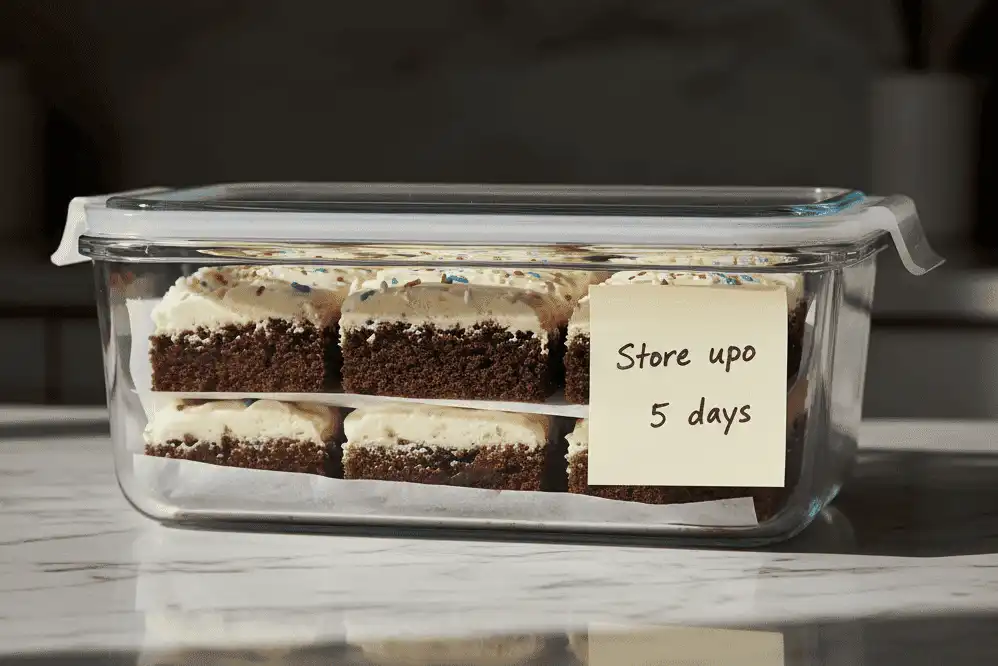
Improper storage ruins the delicate texture of a cookie cake, causing the soft center to dry out or the crisp border to become soggy.
Room Temperature Storage
Store your frosted cookie cake in an airtight container or a tightly sealed bakery box lined with plastic wrap at room temperature (65°F to 72°F / 18°C to 22°C). It maintains peak freshness for 3 to 4 days.
Avoid placing the cake in direct sunlight or near warm appliances, which can soften the butter in the frosting and cause borders to collapse.
Refrigeration Rules
Refrigeration accelerates starch retrogradation, causing the cookie crumb to stale faster. Only refrigerate your cookie cake if the frosting contains perishable cream cheese or fresh dairy fillings.
If you must refrigerate, seal the entire box inside two layers of plastic wrap to prevent the cookie from absorbing ambient refrigerator odors.
Freezing and Thawing
Both whole and sliced cookie cakes freeze exceptionally well for up to 3 months. For individual slices, place them on a baking sheet to freeze the outer icing solid for 30 minutes, then wrap each portion tightly in plastic wrap followed by heavy-duty aluminum foil.
Thaw frozen slices on the kitchen counter at room temperature for 1 to 2 hours before serving. Do not thaw in the microwave while wrapped, as trapped condensation makes the base soggy.
The Reheating Trick
To restore that freshly baked bakery texture, place a single slice on a microwave-safe plate next to a small cup of water. Microwave on medium power for 8 to 12 seconds.
The evaporating water adds slight surface humidity while the chocolate chips melt into a warm, gooey consistency.
Dietary Modifications and Allergen Management
Commercial cookie cakes contain common allergens including wheat, dairy, eggs, and soy lecithin. When making a custom cake at home, simple ingredient swaps accommodate dietary restrictions without sacrificing flavor.
Gluten-Free Conversion
Replace all-purpose wheat flour with a commercial 1-to-1 gluten-free baking blend containing xanthan gum. Increase the resting time of the dough by 15 minutes before pressing it into the pan to allow the rice flours to hydrate fully.
Dairy-Free and Vegan Adjustments
Substitute the unsalted butter with block-style plant-based baking butter (avoid soft tub spreads, which contain excess water). Replace the egg and egg yolk with 1/4 cup of unsweetened applesauce mixed with 1/2 teaspoon of baking powder to preserve the soft, dense crumb.
Nut Cross-Contamination
While standard chocolate chip cakes do not contain tree nuts or peanuts, commercial bakeries frequently process peanut butter cookies and walnut fudge brownies on the same production lines. Highly sensitive individuals should opt for dedicated allergen-free home recipes.
Common Mistakes and How to Avoid Them
Small errors during preparation, baking, and transportation can compromise your dessert. Avoid these frequent missteps:
- Overbaking the Dough: Leaving the pan in the oven until the center feels solid turns your cake into a dry, rock-hard disc once cooled. Remove the pan while the center still looks soft; the hot pan will finish the cooking process on the counter.
- Frosting a Warm Base: Piping buttercream onto a base that has cooled for less than an hour melts the fat emulsion. The borders will slide off the edge into an oily puddle.
- Transporting on Car Seats: Placing a cookie cake box on a slanted vehicle seat causes the dough disc to flex during transit, cracking the center decoration. Always transport the box flat on the trunk floor or the front passenger floorboard.
- Overcrowding Custom Lettering: Requesting lengthy sentences on small 12-inch rounds forces decorators to use narrow piping tips, resulting in illegible, crowded text. Keep greetings concise.
- Using Dull Slicing Knives: Pressing straight down with a dull chef’s knife crushes the soft center and smears the piped border. Use a long, sharp slicing knife warmed under hot water and wiped dry before each cut.
Best Practices for Event Planning
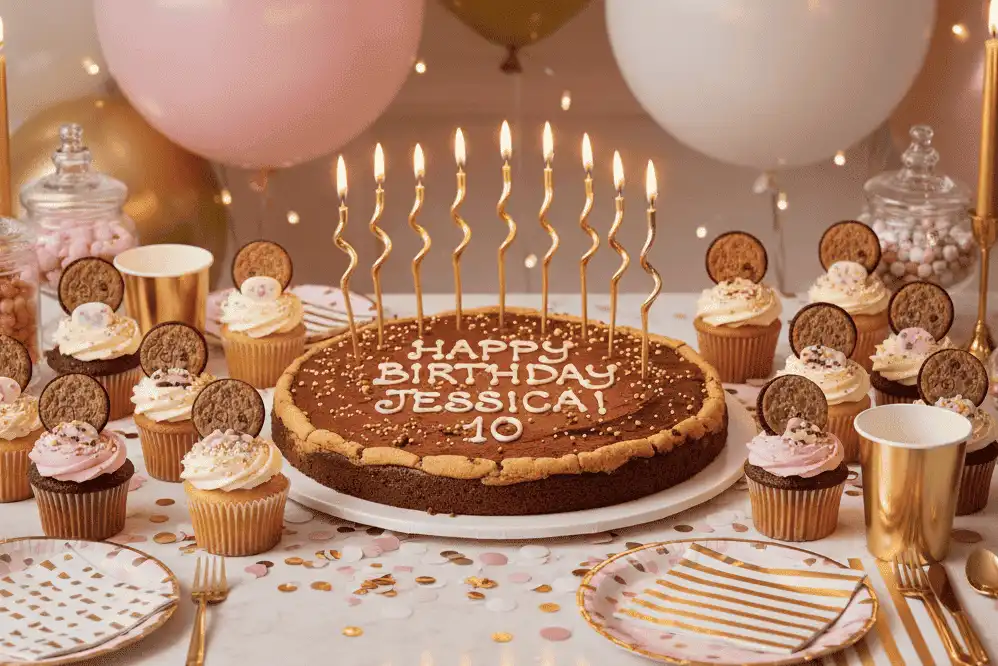
Following these practical steps ensures your dessert service runs smoothly from purchase to cleanup:
- Calculate True Headcounts: Count children as half-portions. A standard 16-inch round easily serves 18 to 20 guests when combined with ice cream scoops.
- Pair with Neutral Sides: Because cookie cakes are rich in butter and sugar, pair them with unsweetened black coffee, cold milk, or tart fresh berry bowls to balance the sweetness.
- Pre-Score Slices: Before guests arrive, use a clean knife tip to lightly mark slice lines along the perimeter border. This ensures even portion distribution during busy party moments.
- Keep a Backup Spatula: Metal pie servers lift dense cookie wedges much cleaner than flimsy plastic disposable cutlery.
Recommended Baking and Decorating Tools
These specialized tools help you achieve bakery-quality results when making cookie cakes at home:
- Heavy-Gauge Aluminum 12-Inch Pizza Pan: Heavy aluminum distributes heat evenly, preventing scorched bottom crusts.
- Wilton 1M Open Star Tip: The industry-standard piping tip for producing professional, bakery-style outer shell borders.
- Offset Stainless Steel Spatula: The angled blade makes it easy to press sticky dough smoothly into pan corners.
- Parchment Pan Liners: Pre-cut 12-inch parchment circles ensure complete release from the pan without tearing the center crumb.
Related Dessert and Celebration Guides
Explore our other dessert guides and baking resources to round out your party planning:
- The Science of Fudgy vs. Cakey Brownies: Pro Ratios
- Crusting Buttercream Masterclass: Formulas for Crisp Lettering
- Party Dessert Calculator: Portions for Large Crowds
- Freezing and Refreshing Homemade Cookie Dough
- 1-to-1 Flour Replacement Guide for Chewy Baked Goods
Authoritative Baking References
For further technical reading on dough chemistry, food safety, and commercial baking standards, consult these references:
- King Arthur Baking Company: Professional Ingredient Weight and Ratios Database
- USDA FoodData Central: Nutritional Composition of Baked Goods and Confections
- American Society of Baking: Commercial Thermal Processing and Starch Gelatinization Standards
Key Takeaways
- The signature chewy texture of a Great American Cookie Cake relies on high brown sugar ratios, melted butter, and metal pan containment that keeps the center soft while crisping the rim.
- A standard 16-inch round cake reliably yields 14 to 18 generous slices and accommodates custom multi-line text and detailed borders.
- When baking at home, pull the cookie from the oven when the outer edge is golden brown but the center is still pale and slightly soft.
- Store your cookie cake at room temperature in an airtight container for up to 4 days. Avoid the refrigerator, which speeds up staling.
- Always transport cookie cake boxes flat on vehicle floorboards to prevent center flexing and icing cracks.
Planning Your Next Celebration
A well-made cookie cake combines the comfort of a warm chocolate chip cookie with the visual excitement of a decorated party cake. By selecting the right size for your guest list or following the exact dough-to-fat ratios in our copycat recipe, you can serve a dessert that looks impressive and gets eaten down to the last crumb.
Review the sizing comparison table, gather your ingredients or place your bakery order early, and enjoy a celebration treat that always delivers.
Frequently Asked Questions
How many people does a 16-inch Great American Cookie Cake feed?
A standard 16-inch round Great American Cookie Cake provides approximately 14 to 18 generous wedge-style slices. For larger birthday parties, school functions, or youth sports events where smaller portions are preferred, it can easily be cut into 20 to 24 narrower party portions.
How long does a Great American Cookie Cake stay fresh?
A decorated cookie cake stays fresh for 3 to 4 days when stored at room temperature in an airtight container or a tightly wrapped bakery box. Keep it away from direct sunlight and heat sources to prevent the buttercream borders from softening or melting.
Should you refrigerate a Great American Cookie Cake?
Do not refrigerate a standard chocolate chip cookie cake with buttercream or fudge icing. Cold refrigerator air accelerates starch retrogradation, making the cookie dry and stale. Refrigeration is only necessary if the cake features perishable toppings like fresh fruit or cream cheese frosting.
Can you freeze a Great American Cookie Cake?
Yes, cookie cakes freeze well for up to 3 months. Wrap whole cakes or individual slices tightly in plastic wrap, followed by a layer of heavy-duty aluminum foil to prevent freezer burn. Thaw the wrapped cake at room temperature for 1 to 2 hours before serving.
How far in advance should I order a Great American Cookie Cake?
For standard designs with basic lettering, most bakery kiosks require only 1 to 2 hours of advance notice. For complex custom artwork, photo prints, or orders during major holidays like Valentine’s Day and graduation weekend, place your order 48 to 72 hours in advance.
What is the secret to getting a chewy center in a homemade cookie cake?
The secret is using a high ratio of dark brown sugar to granulated white sugar, adding an extra egg yolk for fat richness, and slightly underbaking. Pull the cake from the oven when the edges are golden brown but the center is still pale and soft.
How much does a Great American Cookie Cake cost?
Prices vary by regional franchise and customization complexity. Generally, a 12-inch round ranges from $22 to $30, a 16-inch round costs between $34 and $48, and specialty sheet cakes range from $50 to $75 depending on custom piping and edible photo printing additions.
Can you reheat cookie cake slices?
Yes, reheating individual slices restores their freshly baked warmth and melts the chocolate chips. Place a single slice on a microwave-safe plate next to a small cup of water and microwave on medium power for 8 to 12 seconds for optimal texture.