A dinner cake is a baked dish with the shape and comfort of cake, but the flavor profile of a full meal. It can be a savory cake for dinner, a sliceable centerpiece for guests, or a not-too-sweet savory dessert to finish the evening. Below, you’ll find three reliable dinner cake recipes, exact ingredients, practical tools, and step-by-step baking guidance.
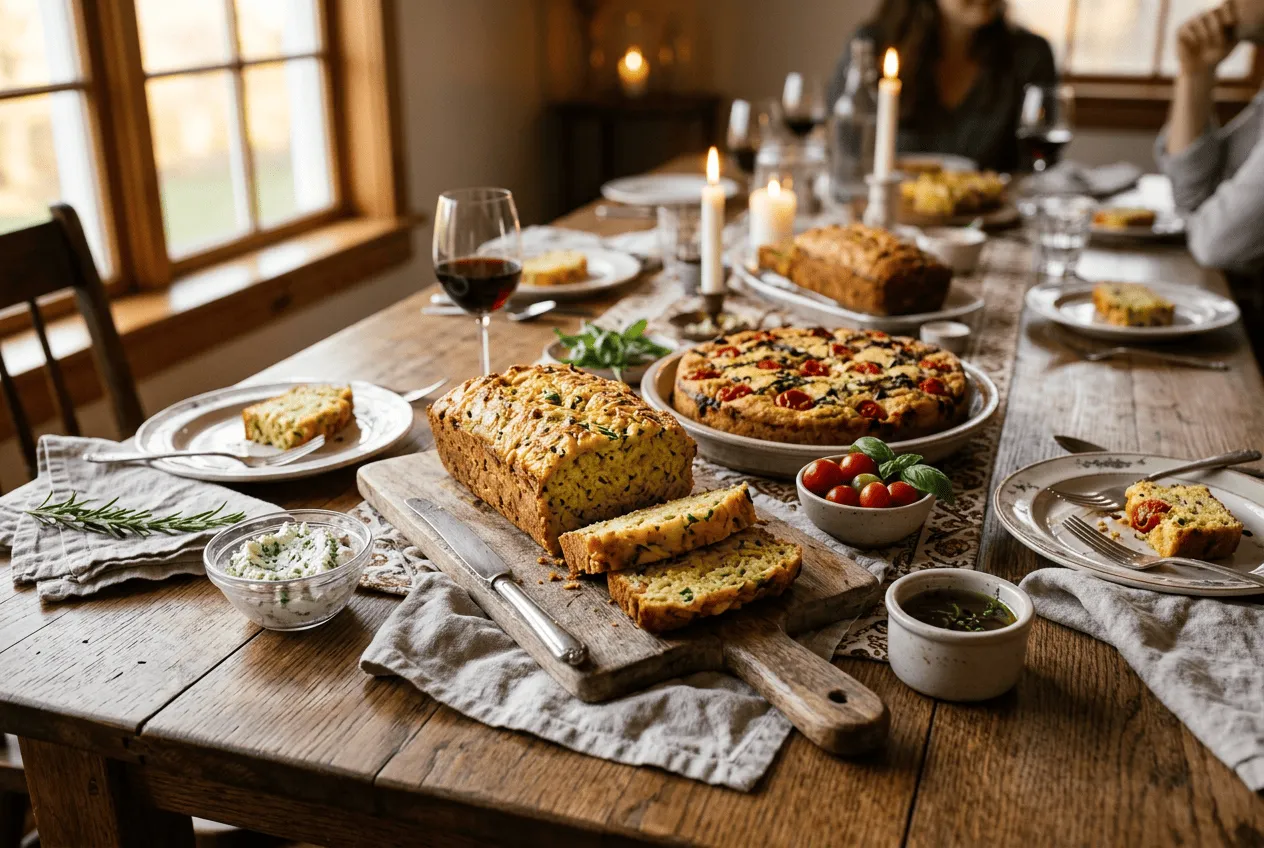
What makes a cake work for dinner?
A cake works for dinner when it has structure, balance, and enough savory depth to feel satisfying rather than sugary. Cheese, herbs, vegetables, grains, olive oil, and eggs help create that dinner-friendly texture. The best dinner party cake slices cleanly, holds its shape, and tastes good warm or at room temperature, which makes it easier to serve without stress.
You can think of these recipes as flexible baked centerpieces. Serve a savory cake with salad, roasted vegetables, soup, or cured meats. If you want a dessert course, choose a lightly sweet cake with olive oil, dark chocolate, citrus, or berries so it still feels elegant after a savory meal.
Recommended tools for better dinner cakes
Good tools make these recipes easier and more consistent. You do not need a professional kitchen, but measuring accurately and using the right pan will help each cake bake evenly.
- Digital kitchen scale: Best for flour, cheese, vegetables, and cocoa. Cup measurements are included, but grams are more precise.
- 9 x 5-inch loaf pan: Ideal for the cheddar zucchini savory cake.
- 8-inch round cake pan: Best for the tomato basil polenta cake.
- 9-inch round cake pan: Use for the chocolate olive oil savory dessert cake.
- Electric hand mixer or stand mixer: Helpful for smooth batters, especially the chocolate cake.
- Silicone spatula: Useful for folding vegetables, scraping bowls, and spreading batter evenly.
- Parchment paper: Prevents sticking and helps lift cakes cleanly from the pan.
- Piping bag, optional: Useful if you want to pipe herbed cream cheese or whipped ricotta on a cooled dinner party cake.
Recipe 1: Cheddar Zucchini Herb Savory Cake
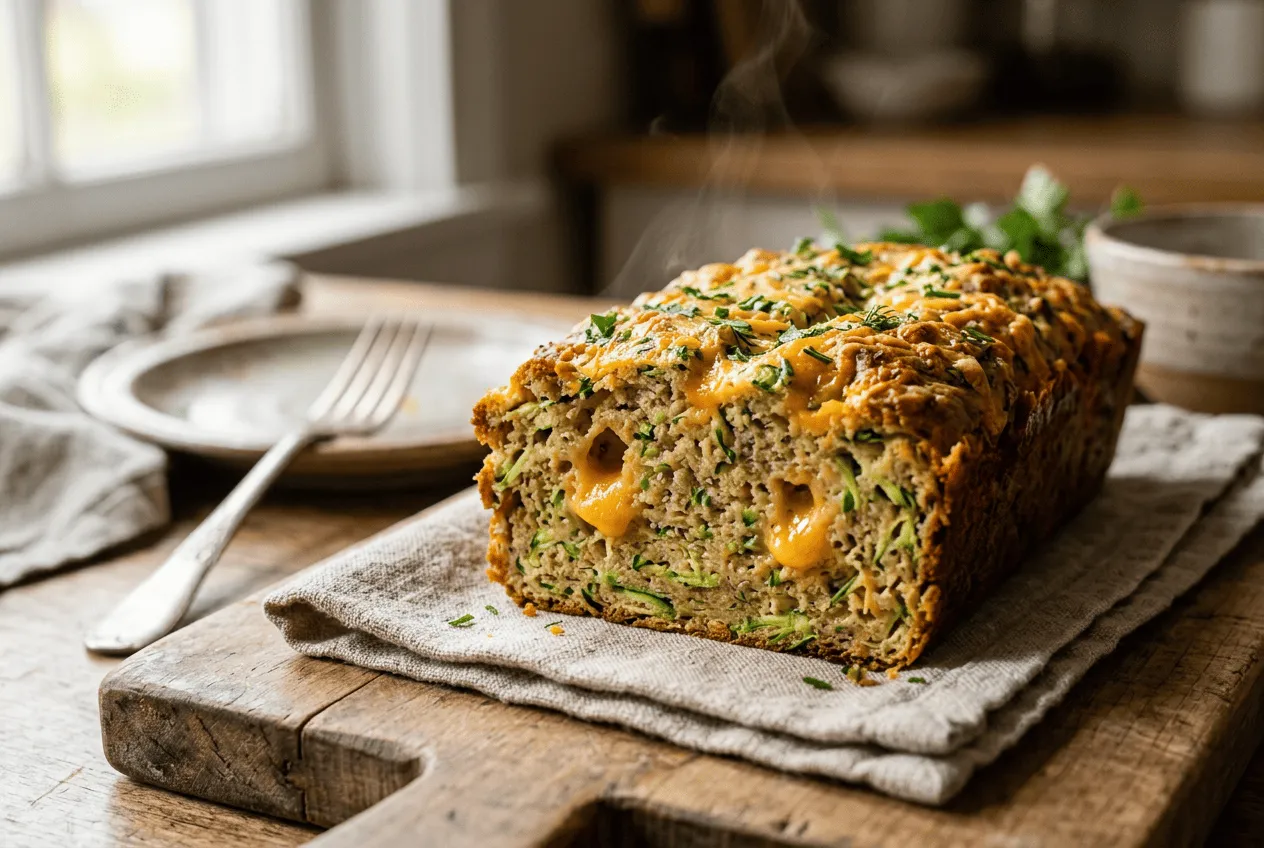
This is the most classic cake for dinner in the group. It is moist, cheesy, and packed with herbs, with enough structure to slice like a loaf. Serve it warm with tomato soup, a crisp green salad, or roasted chicken.
Ingredients
- All-purpose flour: 180 g / 1 1/2 cups
- Baking powder: 10 g / 2 teaspoons
- Fine salt: 6 g / 1 teaspoon
- Black pepper: 2 g / 1 teaspoon
- Large eggs: 150 g / 3 eggs
- Whole milk: 120 g / 1/2 cup
- Olive oil: 80 g / 1/3 cup
- Grated zucchini, squeezed dry: 180 g / 1 1/2 cups
- Sharp cheddar, grated: 120 g / 1 cup
- Parmesan, finely grated: 30 g / 1/3 cup
- Chopped scallions: 40 g / 1/3 cup
- Chopped fresh parsley: 15 g / 1/4 cup
- Chopped fresh dill: 8 g / 2 tablespoons
- Lemon zest: 4 g / 1 tablespoon
- Butter or oil for pan: 14 g / 1 tablespoon
Step-by-step baking guide
- Prepare the pan. Heat the oven to 350°F / 175°C. Grease a 9 x 5-inch loaf pan with butter or oil, then line it with parchment paper. Leave a little overhang so you can lift the cake out cleanly after baking.
- Drain the zucchini. Place the grated zucchini in a clean towel. Squeeze firmly until most of the water is removed. This step matters because wet zucchini can make the center heavy or underbaked.
- Mix the dry ingredients. In a large bowl, whisk the flour, baking powder, salt, and black pepper. Whisking spreads the leavening evenly, which helps the savory cake rise without tunnels or dense pockets.
- Mix the wet ingredients. In a second bowl, whisk the eggs, milk, and olive oil until smooth. You can use a hand whisk or an electric mixer on low speed. Keep the mixture even, but do not whip in too much air.
- Combine the batter. Pour the wet mixture into the dry mixture. Fold gently with a silicone spatula until only a few flour streaks remain. Add the zucchini, cheddar, Parmesan, scallions, parsley, dill, and lemon zest. Fold just until combined.
- Fill and level the pan. Spoon the batter into the prepared loaf pan. Smooth the top with the spatula. Tap the pan gently on the counter once or twice to settle the batter.
- Bake until set. Bake for 45 to 55 minutes. The top should be golden, and a toothpick inserted in the center should come out clean or with a few moist crumbs. If the top browns too quickly, loosely tent it with foil.
- Cool before slicing. Let the cake rest in the pan for 15 minutes. Lift it out using the parchment, then cool for another 15 minutes on a rack. Slice with a serrated knife for clean pieces.
Recipe 2: Tomato Basil Polenta Dinner Cake
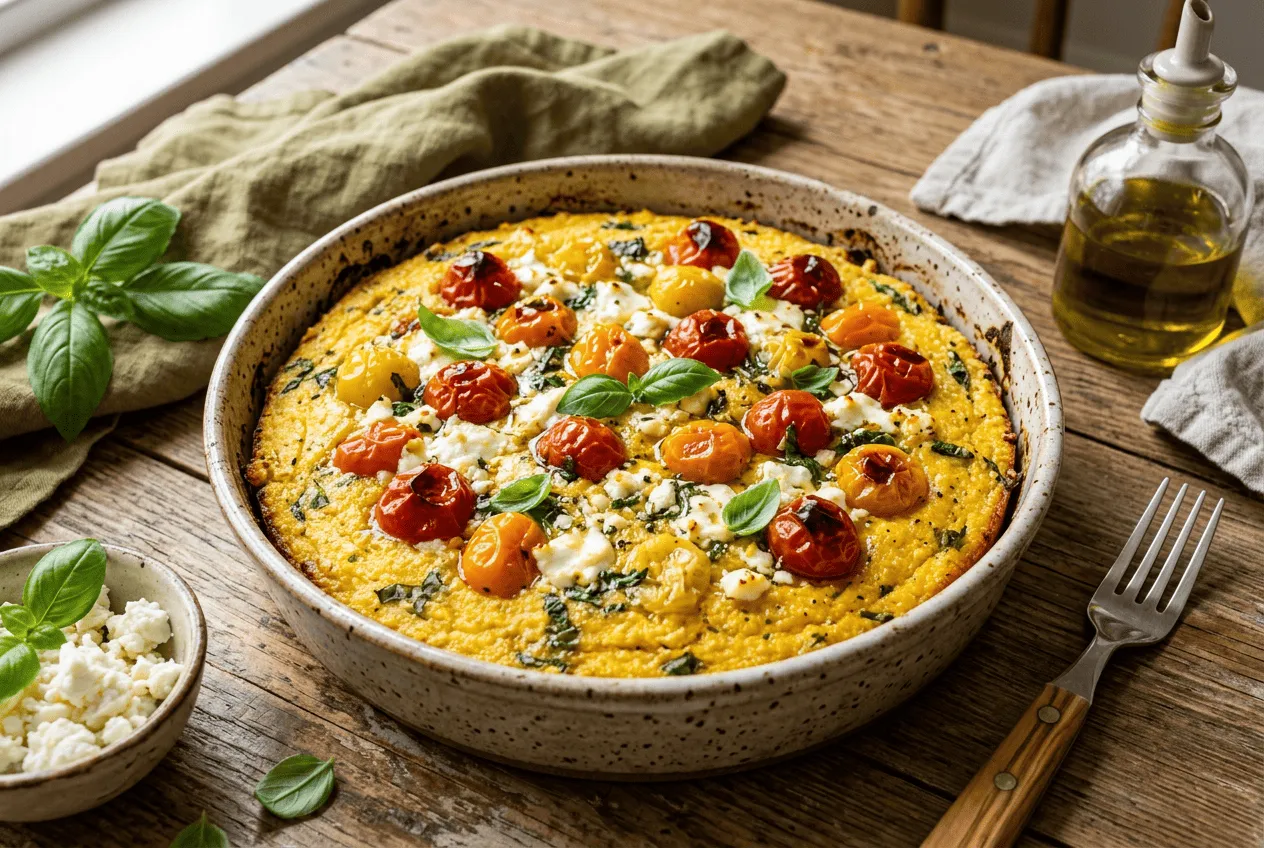
This dinner cake is soft, rustic, and naturally sturdy. Cornmeal gives it a sunny color and satisfying crumb, while tomato, basil, and feta make it feel like a Mediterranean main dish. It works especially well as a dinner party cake because it looks beautiful baked in a round pan.
Ingredients
- Fine cornmeal or quick polenta: 140 g / 3/4 cup
- All-purpose flour: 95 g / 3/4 cup
- Baking powder: 8 g / 1 1/2 teaspoons
- Fine salt: 5 g / 3/4 teaspoon
- Garlic powder: 3 g / 1 teaspoon
- Large eggs: 100 g / 2 eggs
- Plain Greek yogurt: 180 g / 3/4 cup
- Olive oil: 60 g / 1/4 cup
- Whole milk: 80 g / 1/3 cup
- Crumbled feta: 100 g / 3/4 cup
- Cherry tomatoes, halved: 180 g / 1 1/4 cups
- Chopped fresh basil: 12 g / 1/3 cup
- Chopped chives: 10 g / 1/4 cup
- Honey: 14 g / 2 teaspoons
- Butter or oil for pan: 14 g / 1 tablespoon
Step-by-step baking guide
- Prepare the oven and pan. Heat the oven to 350°F / 175°C. Grease an 8-inch round cake pan and line the bottom with parchment paper. A light-colored pan is helpful because it reduces the risk of overbrowning the edges.
- Stir the dry base. In a mixing bowl, combine the cornmeal, flour, baking powder, salt, and garlic powder. Break up any clumps with a whisk. This keeps the texture tender rather than gritty.
- Blend the wet mixture. In another bowl, whisk the eggs, Greek yogurt, olive oil, milk, and honey. The yogurt adds tenderness and a gentle tang. If the mixture looks slightly thick, that is normal.
- Make the batter. Add the wet mixture to the dry mixture. Fold with a silicone spatula until combined. Stir in the feta, basil, and chives, saving a small spoonful of herbs for garnish if desired.
- Add the tomatoes. Spread the batter in the pan. Arrange the halved cherry tomatoes cut-side up on top. Press them lightly into the batter so they sit securely but remain visible.
- Bake the cake. Bake for 35 to 42 minutes. The edges should pull slightly from the pan, and the center should spring back when touched gently. A toothpick should come out mostly clean.
- Rest and serve. Cool in the pan for 10 minutes, then turn out carefully or serve directly from the pan. Add extra basil before serving. This cake is excellent with grilled vegetables, olives, or a lemony arugula salad.
Recipe 3: Dark Chocolate Olive Oil Savory Dessert Cake
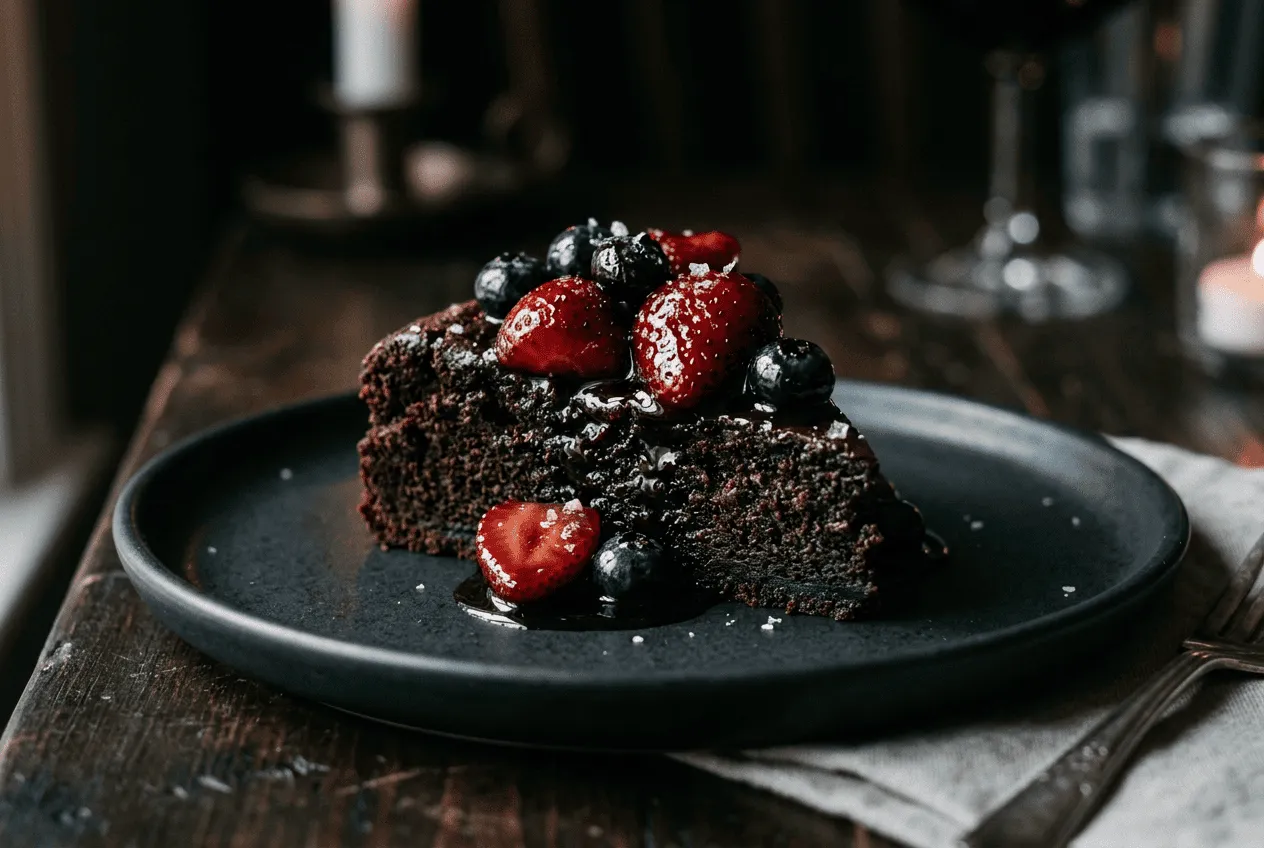
This is the recipe to make when you want a savory dessert after a special meal. It is still chocolate cake, but olive oil, sea salt, and balsamic berries keep it grown-up and balanced. Serve small slices after a rich dinner.
Ingredients
For the cake
- All-purpose flour: 155 g / 1 1/4 cups
- Unsweetened cocoa powder: 45 g / 1/2 cup
- Baking soda: 5 g / 1 teaspoon
- Fine salt: 4 g / 3/4 teaspoon
- Granulated sugar: 150 g / 3/4 cup
- Large eggs: 100 g / 2 eggs
- Extra-virgin olive oil: 120 g / 1/2 cup
- Whole milk: 120 g / 1/2 cup
- Hot brewed coffee or hot water: 120 g / 1/2 cup
- Vanilla extract: 5 g / 1 teaspoon
- Orange zest: 3 g / 2 teaspoons
- Butter or oil for pan: 14 g / 1 tablespoon
For the balsamic berries
- Strawberries, sliced: 200 g / 1 1/2 cups
- Blueberries: 100 g / 2/3 cup
- Balsamic vinegar: 15 g / 1 tablespoon
- Sugar: 12 g / 1 tablespoon
- Flaky sea salt: 1 g / 1/4 teaspoon
Step-by-step baking guide
- Prepare the pan. Heat the oven to 350°F / 175°C. Grease a 9-inch round cake pan and line the bottom with parchment. Dust lightly with cocoa powder if you want extra insurance against sticking.
- Combine the dry ingredients. Whisk the flour, cocoa powder, baking soda, salt, and sugar in a large bowl. Cocoa can clump, so sift it first if it looks lumpy.
- Mix the wet ingredients. In a separate bowl, use an electric mixer or whisk to blend the eggs, olive oil, milk, vanilla, and orange zest. Mix until glossy and smooth.
- Finish the batter. Add the wet ingredients to the dry ingredients. Stir gently, then pour in the hot coffee or hot water. The batter will look loose. That is expected and helps create a moist crumb.
- Bake the cake. Pour the batter into the pan. Bake for 30 to 36 minutes, until the center is set and a toothpick comes out with a few moist crumbs. Do not overbake; chocolate cakes continue to firm as they cool.
- Make the berries. While the cake cools, combine the strawberries, blueberries, balsamic vinegar, sugar, and flaky salt. Let the fruit sit for 15 minutes so the juices become syrupy.
- Serve with balance. Cool the cake for at least 20 minutes before slicing. Spoon the balsamic berries over each slice. For a dinner party, you can add a small spoonful of whipped cream or mascarpone, but keep it light.
How should you serve cake for dinner?
Serve cake for dinner the way you would serve a tart, frittata, quick bread, or composed side dish: with contrast. A rich savory cake needs something fresh, crisp, acidic, or brothy beside it. That balance keeps the meal from feeling too heavy.
For casual meals, slice the cheddar zucchini cake and pair it with soup or salad. For gatherings, place the tomato basil polenta cake on a platter, garnish with herbs, and cut it into wedges at the table. For dessert, serve the chocolate olive oil cake in modest slices so the savory dessert feels refined rather than overwhelming.

Easy pairing ideas
- Cheddar zucchini herb cake: tomato soup, green salad, roasted mushrooms, or poached eggs.
- Tomato basil polenta cake: arugula salad, grilled eggplant, olives, or lemon chicken.
- Chocolate olive oil cake: espresso, red wine, whipped mascarpone, or fresh berries.
- Dinner party board: sliced savory cake, soft cheese, pickles, herbs, and roasted vegetables.
Professional baking tips and tricks
Use these tips for better texture, cleaner slices, and more reliable results.
- Check your oven temperature. Many ovens run hot or cool. If possible, use an oven thermometer and bake at the stated 350°F / 175°C rather than guessing.
- Measure by weight when you can. A kitchen scale gives more consistent results than scooping flour or grated cheese into cups.
- Do not overmix. Once flour meets liquid, stir only until combined. Overmixing can make a dinner cake tough.
- Watch vegetable moisture. Squeeze zucchini dry and avoid adding watery tomatoes directly into the batter unless the recipe says so.
- Use the right pan size. A smaller pan can cause overflow or a raw center. A larger pan can make the cake dry.
- Check doneness in the center. Insert a toothpick or thin skewer into the thickest part. Savory cakes should show no wet batter. Chocolate cake can show a few moist crumbs.
- Cool before cutting. Warm cakes are delicate. Resting helps the crumb set, which creates cleaner slices.
- Store properly. Wrap cooled savory cakes and refrigerate for up to 3 days. Store the chocolate cake covered at room temperature for 1 day or refrigerate for up to 3 days.
- Reheat gently. Warm savory slices in a 300°F / 150°C oven for 8 to 10 minutes. Avoid microwaving for too long, which can make the texture rubbery.
- Dress it up for guests. Use a piping bag to add small dots of herbed cream cheese, whipped ricotta, or mascarpone around the plate.
Make-ahead plan for a low-stress dinner party
A dinner party cake should make hosting easier, not harder. The cheddar zucchini cake and tomato basil polenta cake can be baked earlier in the day and served slightly warm or at room temperature. The chocolate olive oil cake can be made the day before, then topped with freshly mixed berries shortly before serving.
For the smoothest timeline, weigh your dry ingredients in advance and store them covered. Grate cheese, chop herbs, and line pans before guests arrive. If you are making more than one recipe, bake the savory cake first, then the dessert cake, so the chocolate has plenty of time to cool.
Troubleshooting common dinner cake problems
Even simple cakes can behave differently depending on moisture, pan type, and oven heat. If something goes wrong, the fix is usually straightforward.
- Cake is dense: The batter may have been overmixed, or the baking powder may be old. Mix gently and check freshness before baking.
- Center is underbaked: The pan may be too small, the vegetables too wet, or the oven too cool. Continue baking in 5-minute increments and tent the top with foil if needed.
- Cake sticks to the pan: Use parchment on the bottom and grease the sides well. Let the cake rest briefly before removing it.
- Top browns too fast: Move the cake to a lower rack or cover loosely with foil.
- Flavor tastes flat: Add enough salt, herbs, citrus zest, or cheese. Savory cake needs seasoning just like dinner.
Dinner cake is practical, memorable, and surprisingly easy once you understand the formula. Start with the cheddar zucchini loaf for a cozy weeknight, make the tomato basil polenta cake for guests, and save the chocolate olive oil cake for a polished savory dessert finish.